
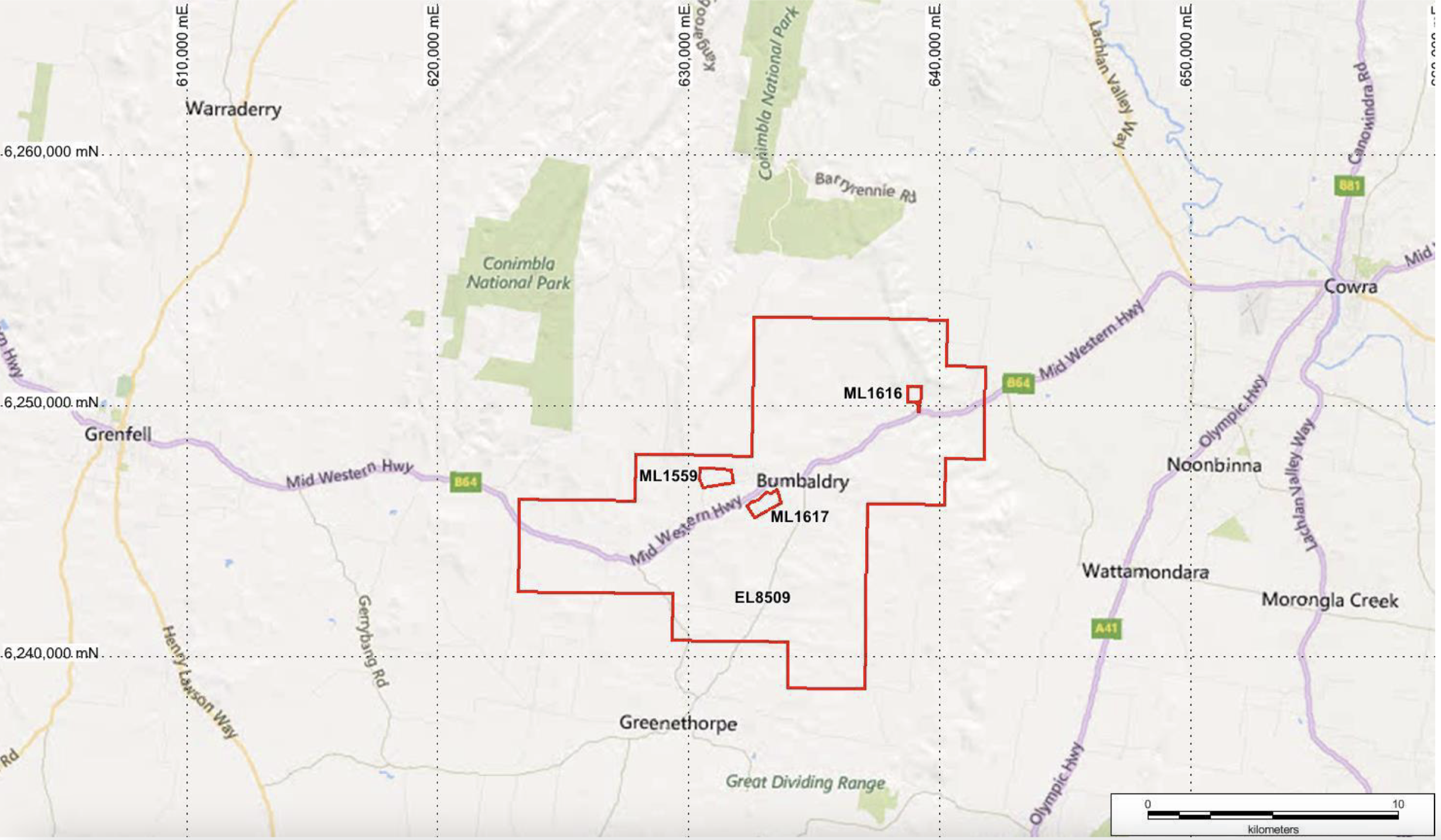
EL8509
EL 8509 comprises of 140.9 km2 and contains two granted well maintained Mining licenses – one for Gold the other for Iron. The area covered by EL 8509 is highly prospective. Although the primary target for EL 8509 is gold and copper, the iron Mineralisation is likely genetic association with porphyry, skarn and epithermal Au- Cu-Ag.
Regional geology
EL8509 is considered prospective for high sulphidation epithermal gold similar to Broula King and contact metasomatic (skarn) iron and copper mineralisation. Source: RBX Exploration report 2017
Gold/Copper prospectivity
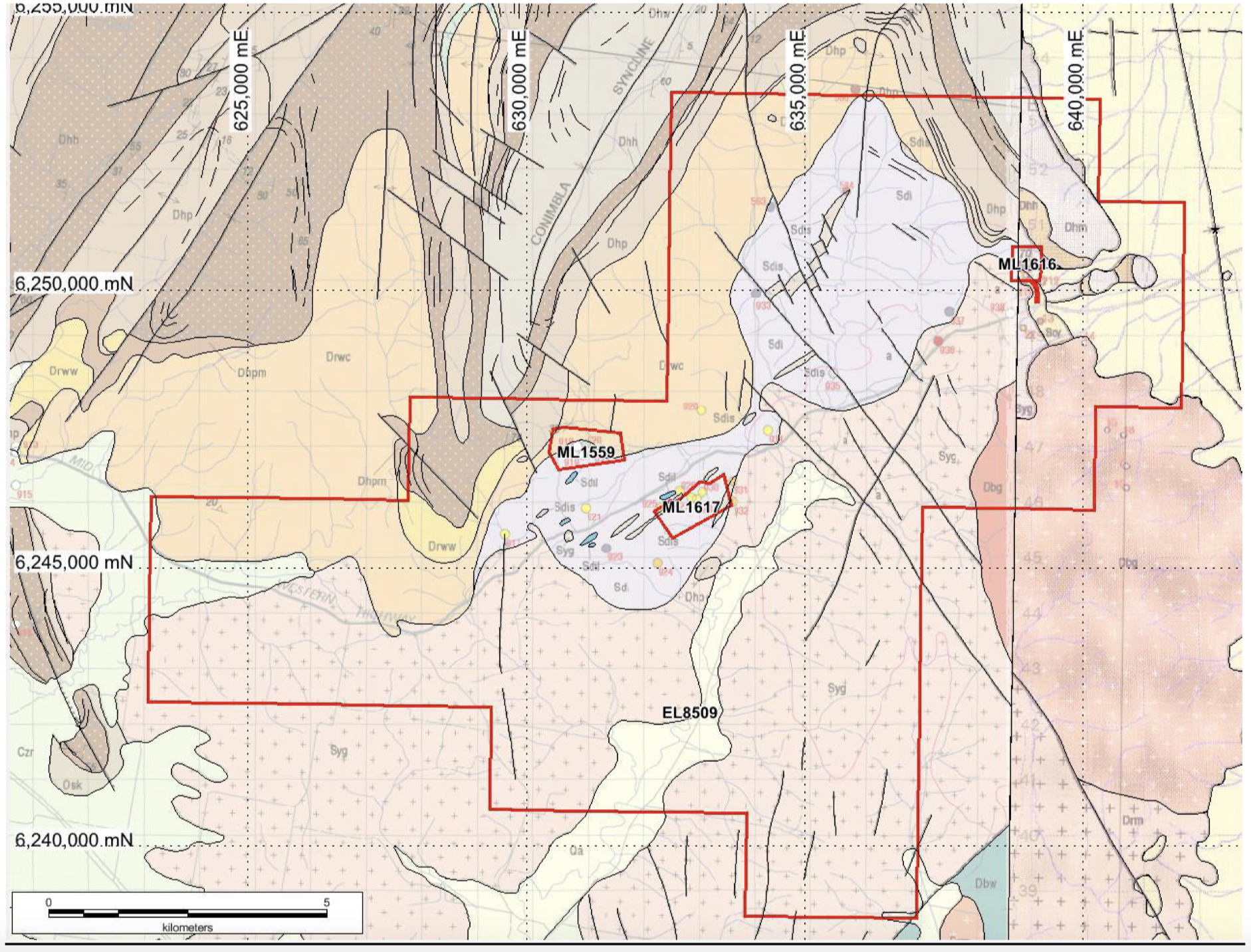
The Bumbaldry area contains a number of gold, copper and silver occurrences, including the Broula King gold mine (covered by granted Mining License (ML) 1617, as shown in Figure 1 above),the Cowfell Copper mine and the Claypit alteration zone. The mineralisation is hosted by units of the Early Silurian Illunie Volcanics, which have been intruded by the Silurian Young Granodiorite to the south of the Broula King area. In 1976 Western Mining Corporation Limited (WMC) completed a ground magnetic survey (Anon., 1976) over the Broula King and Cowfell mines as shown in figure 3.
a) Broula King Gold Mine
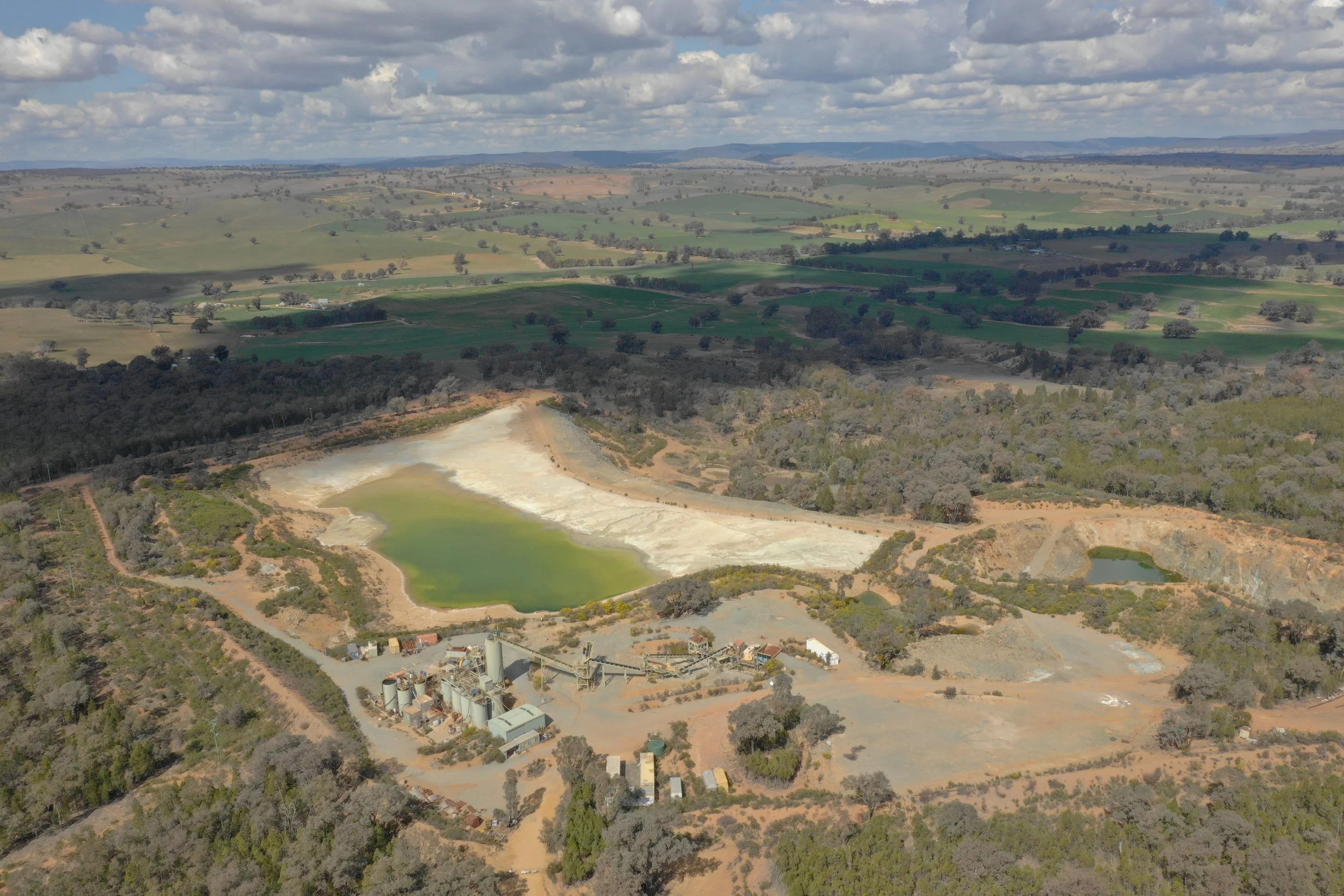
The Broula King gold mine consists of at least five north-northwest trending zones, which dip moderately to the west, and two east trending zones, which dip vertically. The deposit has been reported to contain "In situ reserves totalling 210 000 tonnes at 2.6 g/t Au" (Cluff Resources Pacific Ltd and Lachlan Resources N.L., 1989, p. 7). The mineralisation is hosted by altered and brecciated felsic to intermediate volcanic rocks, volcaniclastic sedimentary rocks, and carbonate units of the Illunie Volcanics. Gold mining (multiple shafts) at Broula King is reported to have commenced in 1901 and to have continued intermittently until 1939. Accounts from this period record production in the order of 5,000 tonnes at 18g/t for 2,920 oz. of gold. Process tailings of in excess of 10,000 tonnes at around 3 g/t are on site presently and expected to be reprocessed. The Broula King Joint Venture (BKJV) was established in 2007 and commenced open cut mining operations at Broula King on granted ML1617 which lies at the centre of EL 809 in May 2012 and processing began in August 2012. A total of 186,863 tonnes of ore at 2.50 g/t gold were treated to produce 11,482 ounces of gold. The plant (capable of processing at 100,000 tpa) was placed on ‘Care and Maintenance’ in August 2014. Two styles of mineralisation at the Broula King deposit have been described as "interstitial finegrained gold within highly silicified wall rock ...; and vein ore where coarse gold is found in the outer edges of thin quartz veins". The veins are up to 1.5 metres thick. Some of the veins contain colloform textures and in places the quartz is chalcedonic. The sulphides associated with the mineralised veins include pyrite, galena, and sphalerite, with lesser chalcopyrite. The reefs consist of quartz veins and stockworks. The mineralisation formed as part of a moderately high sulphur system, at low to moderate temperatures, which probably overprinted an earlier porphyry stage. Considerable additional prospectivity exists within the ML
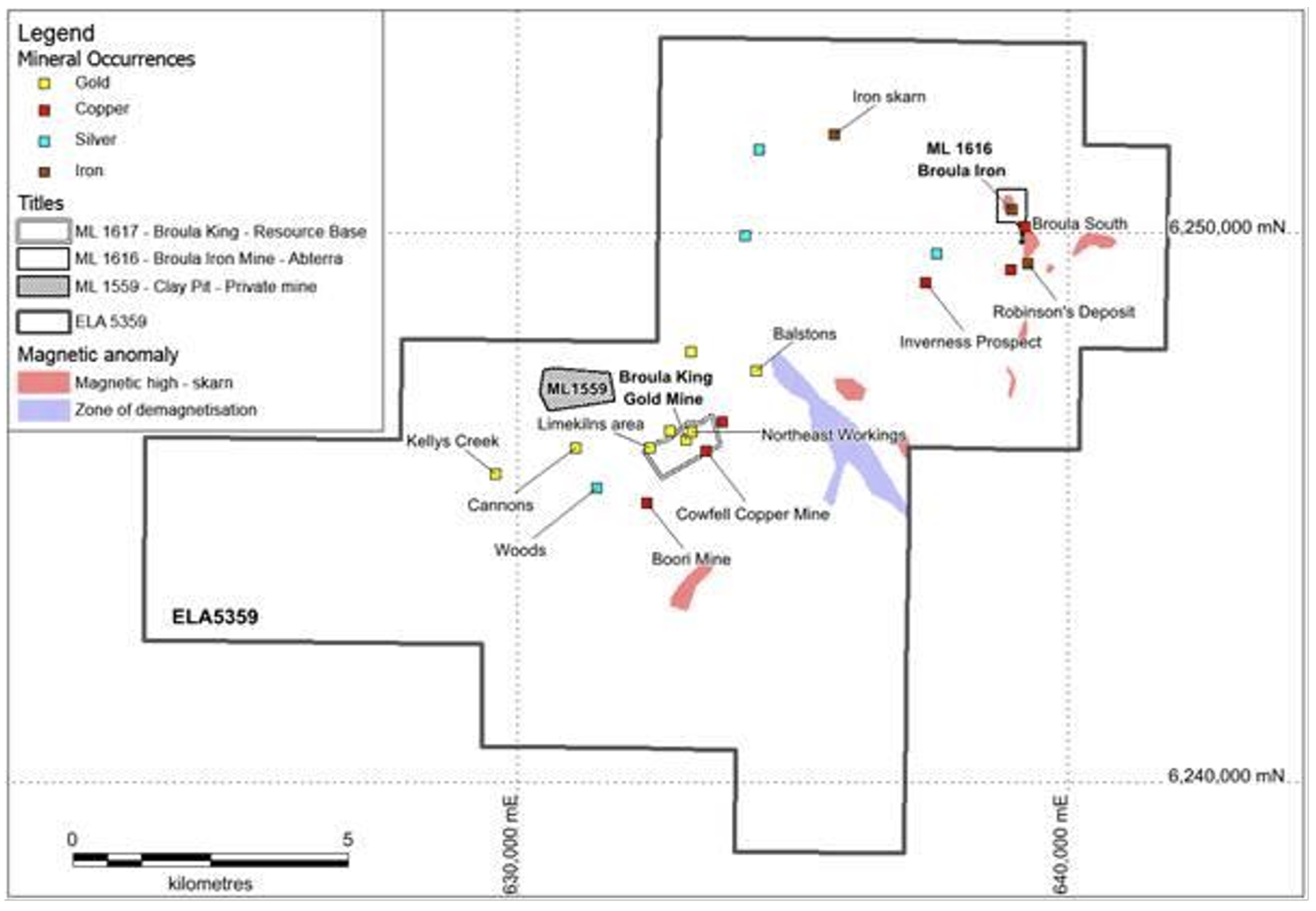
Magnetite prospectivity The Broula area hosts several minor skarn sulphide copper-gold and iron occurrences, and Broula magnetite skarn is one of the three significant magnetite occurrences in NSW. Approximately 7km from Broula King ML1617 sits ML1616, a historical magnetite mine (see figure 2) purchased by Australian Mangetite Mines Pty Ltd in 2018 from Singaporean owned ASX company Abterra Ltd. ML1616 sits within BKE’s EL8509, containing approximately 955,000 tonnes of ore. Source: chromeextension://efaidnbmnnnibpcajpcglclefindmkaj/https://meg.resourcesregulator.nsw.gov.au/sites/de fault/files/2022-11/magnetite.pdf Recent investigations have estimated the size of the magnetite resource to about 1.3 million tonnes (RW Corkery and Company Pty Ltd 2007). In 2018, Resource Base Ltd were in talks to purchase ML1616 from Abterra Ltd, with the view to trucking the magnetite to the Broula King Processing Plant for processing. With the issues facing Abterra at the time, these talks proved unfruitful. Figure 2 shows similar magnetite high-skarn occurrence closer to ML1617. (Source: RBX Exploration report 2017). Little drilling and exploration has been done on this area. However, it highlights the further blue-sky prospectivity on EL8509.
b) The Cowfell Copper Mine
Copper was discovered 400 metres to the east of the Broula King Mine at Cowfell by Mr. O'Brien in 1903. The Annual Report of the Department of Mines for 1905 (page 45) reported the ore occurring in a lode varying from one to ten feet in width. The mine was worked until 1912 and appears both primary and secondary copper mineralisation was extracted. Total production appears to have been around 270 tons of ore averaging 7% copper, 1.5g/t gold and 60g/t silver per ton The mine is located in a sequence of apparently interbedded porphyritic acid volcanics and fine labile (tuffaceous?) sandstones, which have a sub-north-south strike. Relationships between these lithologies are difficult to determine because of the limited outcrop and the high degree of weathering. The porphyry is medium green in colour and is composed of partly recrystallized quartz phenocrysts up to 5.0mm in diameter, commonly corroded and embayed and dark clots of chlorite replacing primary ferromagnesian minerals. Primary copper mineralization consists of chalcopyrite within quartz veins. Chalcopyrite shows alteration to the secondary copper sulphide chalcocite. The small euhedral to subhedral pyrite cubes scattered throughout the porphyry show no replacement by base metal sulphides. Malachite and minor azurite staining and impregnations occur along fractures occur in all lithologies. (0g/t Au, 10.3g/t Ag, 1.18% Cu, 0.04% Pb and 0.03% Zn.) Resource Base Limited, Broula King Joint Venture. Annual Exploration Report ML 1617 to 30 March 2020 24 Historic production was probably largely derived from a supergene enriched zone at the water table which coincides with the greatest depth (23m) the deposit was worked.